


Astrology Reports6 min read
Chaldean Numerology: How to Calculate Your Name Number
Discover how to calculate your name number using Chaldean Numerology. Understand its significance and learn the step-by-step process.
Read article🎉 100% CASHBACK ON EVERY ORDER — SHOP NOW!
Discover the significance of the 9 planets in Vedic astrology, their meanings, and how they influence our lives.
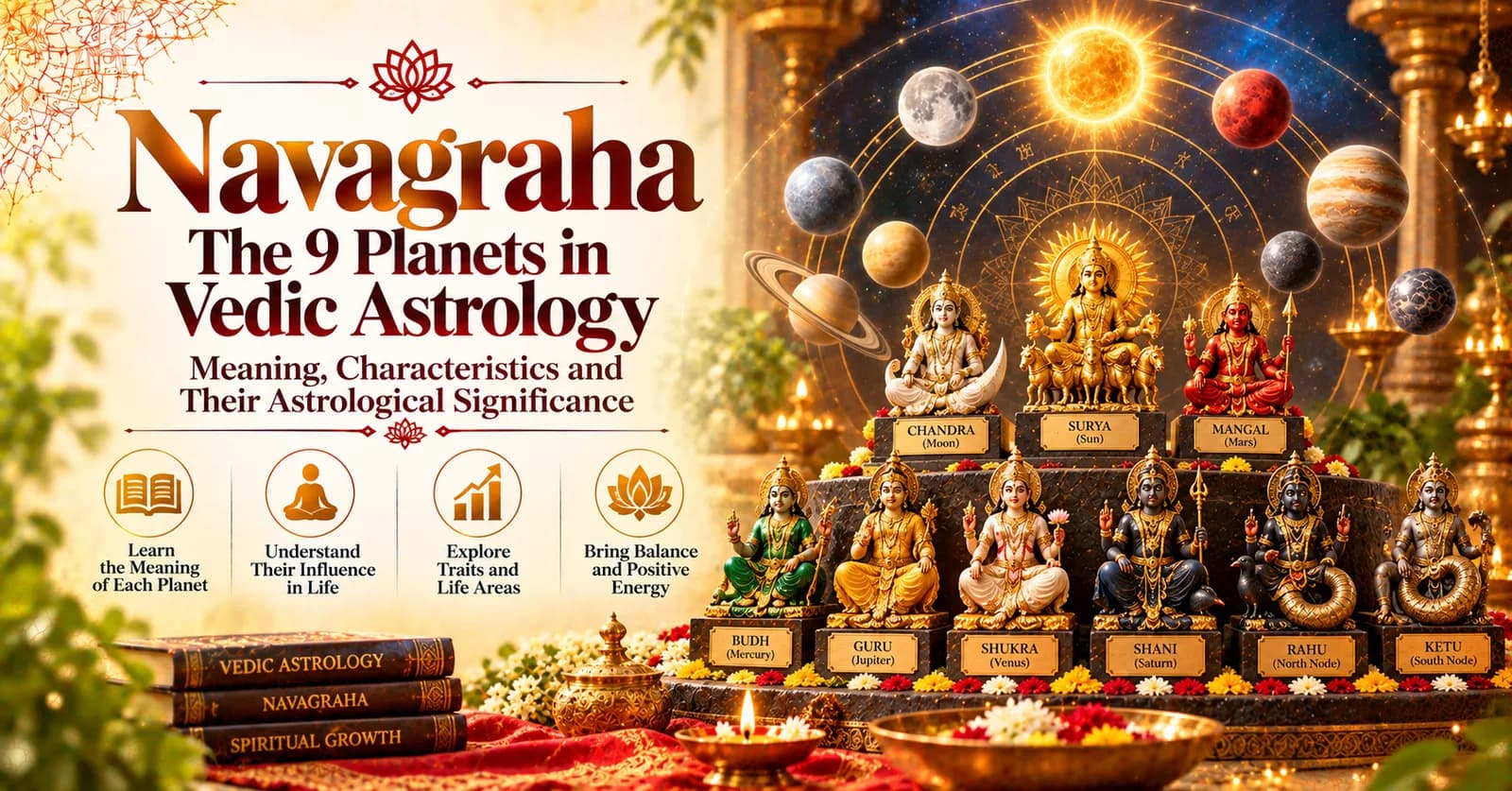
The 9 Planets in Vedic Astrology, known as Navagraha, hold immense significance in understanding our life paths and personalities. Each planet embodies unique characteristics and influences, guiding practitioners in making informed decisions and navigating challenges. Whether you are a beginner or an astrology enthusiast, understanding these celestial bodies is essential for deeper insights into your life and relationships.
Navagraha refers to the nine celestial bodies in Vedic astrology. These planets include the Sun, Moon, Mars, Mercury, Jupiter, Venus, Saturn, Rahu, and Ketu. Each planet is traditionally associated with specific traits, energies, and influences over our lives. Understanding the Navagraha helps individuals comprehend their astrological charts and the energies that affect their lives.
Each planet in the Navagraha plays a unique role in shaping an individual's destiny. The planets are not just celestial bodies; they are seen as embodiments of specific energies that affect human behavior and experiences. For instance, the Sun is linked to authority and vitality, while Venus represents love and beauty. By studying the Navagraha, one can gain insights into personal strengths, weaknesses, and life challenges.
The Sun, regarded as the king of planets, symbolizes authority, vitality, and the soul's essence. It traditionally represents leadership qualities and self-expression. In one's horoscope, the position of the Sun can reveal insights about one's ego, ambitions, and overall life force.
The placement of the Sun in various houses of a natal chart can dramatically change its influence. For example:
The Moon is often seen as a symbol of emotions, intuition, and the subconscious mind. It plays a crucial role in determining one's emotional well-being and relationships. The Moon's placement can indicate how individuals respond to their feelings and the environment around them.
The Moon goes through various phases, each carrying unique energies:
Mars embodies energy, assertiveness, and courage. Traditionally associated with war and conflict, it influences how individuals confront challenges and pursue their desires. The placement of Mars in a natal chart can reveal a person's drive and ambition.
The house placement of Mars can significantly impact its influence:
Mercury symbolizes communication, intellect, and adaptability. It governs how individuals express thoughts and engage with others. The influence of Mercury can enhance or hinder one's ability to articulate ideas and connect socially.
Mercury's influence varies by zodiac sign:
Jupiter is often referred to as the planet of growth and expansion. It represents wisdom, abundance, and spirituality. The placement of Jupiter in one's horoscope can indicate areas of prosperity and moral values.
The placement of Jupiter can reveal areas of growth:
Venus symbolizes love, beauty, and harmony. It governs relationships and aesthetics, influencing how individuals perceive love and attraction. The placement of Venus can indicate one's approach to romance and artistic pursuits.
Venus's influence varies based on its zodiac sign:
Saturn is often seen as the teacher or taskmaster among the planets. It symbolizes discipline, responsibility, and structure. The influence of Saturn can reveal areas where individuals face challenges but also where they can achieve growth through hard work.
The placement of Saturn can indicate where individuals may face challenges:
Rahu and Ketu are known as the shadow planets in Vedic astrology. They represent the karmic axis and are associated with life's challenges and spiritual growth. Their influence is often seen as transformative, guiding individuals toward self-discovery.
The placement of Rahu and Ketu can reveal karmic lessons:
The 9 Planets in Vedic Astrology provide profound insights into our personalities and life paths. Understanding their meanings and traditional significance can empower individuals to make informed decisions and navigate their journeys with awareness. For those interested in deeper insights, astrology reports can offer personalized guidance based on the Navagraha.
For further exploration of Vedic astrology, you might find value in learning about the 12 houses and their roles. You can also enhance your spiritual journey with a Stabilizing Rainbow Moonstone Palm Stone for daily support, or consider the Emotional Harmony Rainbow Moonstone Bracelet to foster emotional balance.
Navagraha refers to the nine celestial bodies in Vedic astrology, including the Sun, Moon, Mars, Mercury, Jupiter, Venus, Saturn, Rahu, and Ketu, each influencing different aspects of life.
The Sun symbolizes authority, vitality, and self-expression. Its position in a natal chart can reveal insights about one's ambitions and overall life force.
The Moon represents emotions, intuition, and subconscious mind. Its placement affects emotional well-being and relationships, guiding how individuals respond to feelings.
Mars embodies energy and assertiveness. It influences how individuals confront challenges and pursue desires, indicating areas of drive and ambition in one's life.
Rahu and Ketu are shadow planets associated with karmic lessons and spiritual growth. They represent transformation and guide individuals toward self-discovery.
Discover how to calculate your name number using Chaldean Numerology. Understand its significance and learn the step-by-step process.
Read article
Discover how to calculate your Soul Urge Number and explore its significance in your life through numerology.
Read article
Explore the meanings of Karmic Debt Numbers 13, 14, 16, and 19 in numerology, and uncover their karmic lessons.
Read article