




Numerology Guides6 min read
Personal Month Number in Numerology: How to Calculate It
Learn how to calculate your Personal Month Number in numerology to gain insights into your monthly cycles and personal growth.
Read article🎉 100% CASHBACK ON EVERY ORDER — SHOP NOW!
Explore the differences and uses of Chaldean and Pythagorean numerology systems. Understand their unique methods and applications.
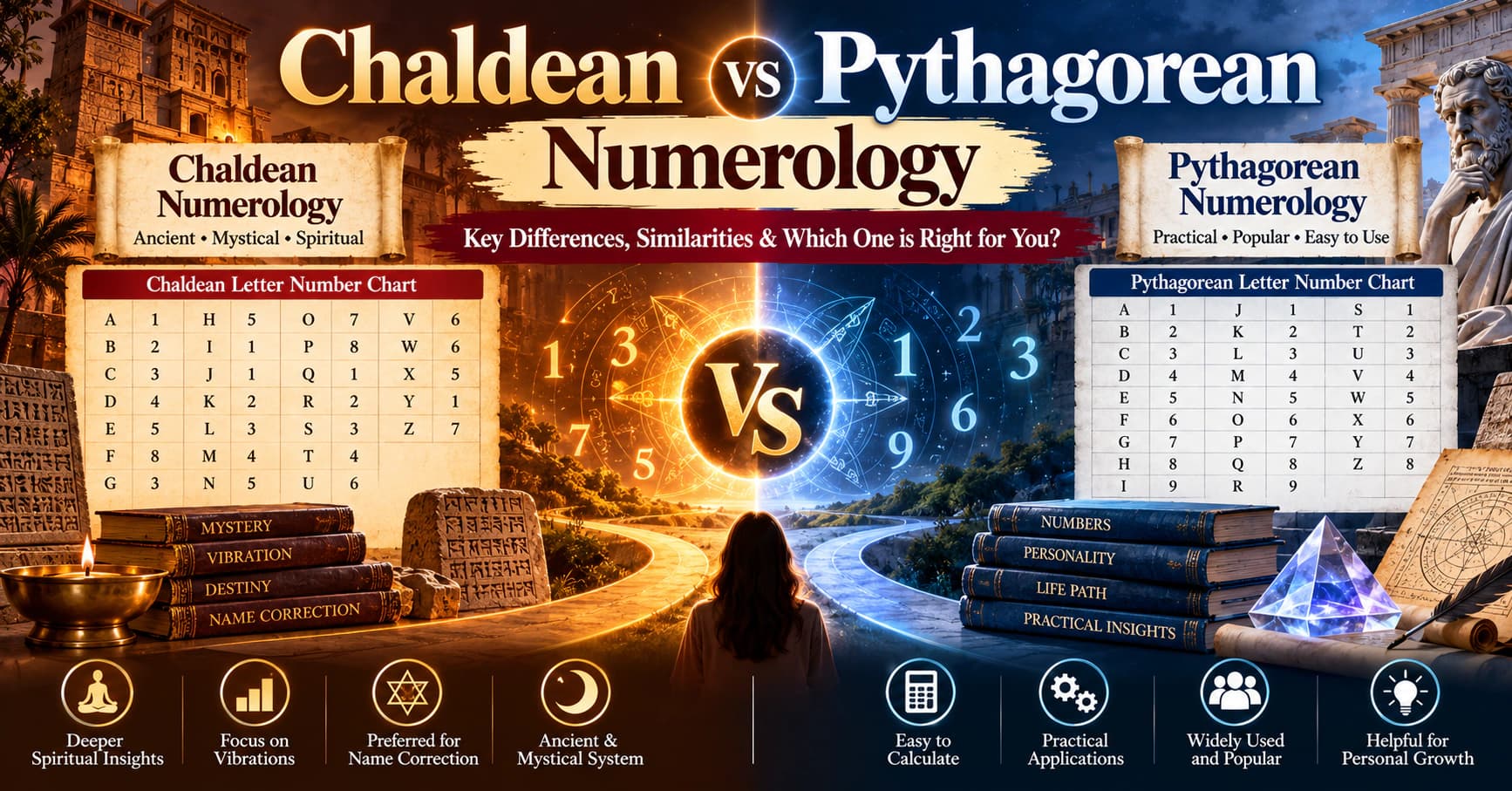
Chaldean vs Pythagorean Numerology highlights two distinct systems of understanding numbers and their meanings in our lives. Both methods use numbers derived from names and birth dates, but they differ significantly in their calculations and interpretations. This article will explore these differences, helping beginners navigate the fascinating world of numerology.
Chaldean numerology, one of the oldest systems, is often regarded as the more mystical approach. It assigns numbers based on the vibrational frequency of letters in a name. Each letter corresponds to a specific number, creating a Chaldean numerology chart that practitioners use to analyse personal traits and life paths.
To calculate your name number using the Chaldean system, follow these steps:
Pythagorean numerology, developed by the ancient Greek philosopher Pythagoras, is more widely known and used today. This system assigns numbers from 1 to 9 to the letters of the alphabet, creating a Pythagorean number chart. It focuses on the mathematical relationships between numbers and their meanings.
Calculating your name number in Pythagorean numerology involves similar steps:
When comparing both systems, it's essential to consider their strengths and weaknesses. Each has unique advantages that cater to different preferences in numerology.
Both Chaldean and Pythagorean numerology have practical applications that can enrich personal understanding and decision-making.
Choosing the right numerology system depends on personal preference and the specific insights one seeks. Here are some considerations for beginners.
To illustrate the differences between these two systems, consider a hypothetical individual named “Anita Sharma.”
Using the Chaldean system, the name “Anita” would be broken down as follows:
Adding these gives: 1 + 5 + 1 + 4 + 1 = 12, which reduces to 3 (1 + 2). Thus, Anita’s Chaldean name number is 3.
In Pythagorean numerology, the calculations would differ:
Summing these gives: 1 + 5 + 9 + 2 + 1 = 18, which reduces to 9 (1 + 8). So, Anita’s Pythagorean name number is 9.
As seen, Anita has different name numbers in each system, leading to varying interpretations about her personality and life path.
Both Chaldean and Pythagorean numerology offer valuable insights into personal traits and life paths. By understanding the methods, differences, and applications of each system, beginners can make informed choices that best suit their needs. Whether you lean towards the mystical Chaldean approach or the practical Pythagorean system, numerology can be a powerful tool for self-discovery and personal growth. For those interested in diving deeper, explore our Chaldean Numerology: How to Calculate Your Name Number and Chaldean Numerology: How the Chaldean Number System Works for further insights. Consider enhancing your spiritual journey with the Mookaite Energy Bracelet, designed to infuse vitality into your life.
The main difference lies in the number assignments. Chaldean numerology uses a unique system assigning numbers 1 to 8, while Pythagorean numerology assigns numbers 1 to 9, making them distinct in calculations and interpretations.
To calculate your name number in Chaldean numerology, assign each letter of your name a number from the Chaldean chart, sum these numbers, and reduce the total to a single digit or master number.
Neither system is inherently better; it depends on personal preference. Chaldean numerology may offer deeper spiritual insights, while Pythagorean numerology is more accessible for beginners.
Yes, many practitioners use both systems to gain a comprehensive understanding of their numerology. Each can provide unique insights into different aspects of life.
Pythagorean numerology is commonly used for personal development, compatibility analysis, and forecasting life events based on name and birth date calculations.