



Best Sellers4 min read
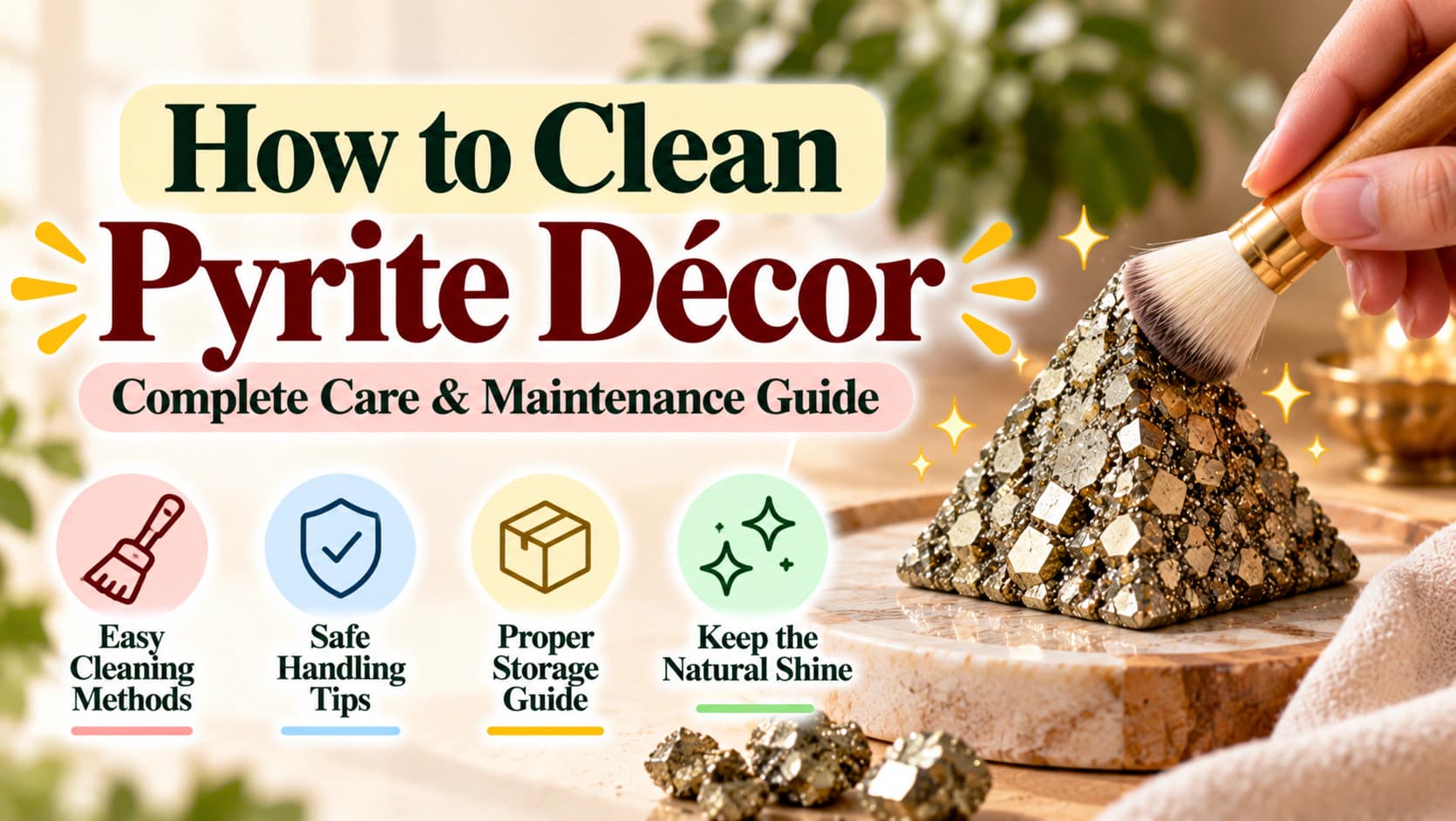
How to Clean Pyrite Décor: Tips for Dusting, Handling & Storage
Learn how to clean Pyrite décor effectively with our comprehensive guide. Discover dusting, handling, and storage tips for maintaining its beauty.
Read article🎉 100% CASHBACK ON EVERY ORDER — SHOP NOW!
Learn to distinguish natural crystal variations from surface damage with this comprehensive guide, perfect for crystal shoppers.
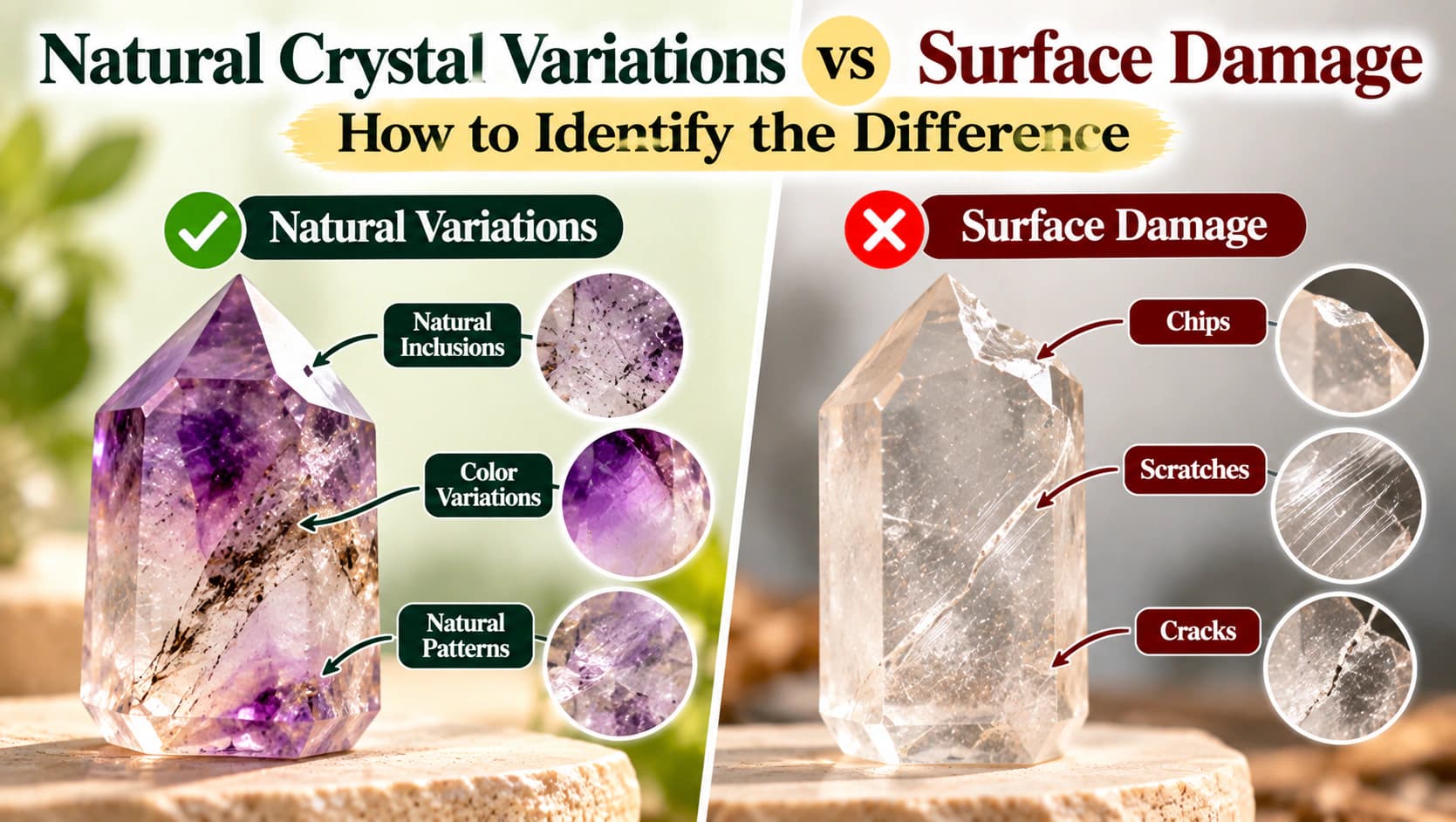
Understanding how to identify natural crystal variations from surface damage is essential for any crystal enthusiast. While natural crystals exhibit unique characteristics, surface damage can mislead buyers about a crystal's quality. This guide will help you discern these differences effectively, ensuring you make informed decisions when purchasing crystals.
Natural crystal variations refer to the unique characteristics formed during a crystal's growth in nature. These variations can include inclusions, colour differences, and unique patterns. Unlike surface damage, which can detract from a crystal's beauty and value, natural variations add to its charm and uniqueness. Familiarizing yourself with these features can enhance your crystal purchasing experience.
Surface marks and cracks can often be mistaken for natural variations. It's crucial to learn how to identify these imperfections. Surface damage typically appears as scratches, chips, or fractures that disrupt the crystal's surface. Understanding these signs can prevent you from purchasing a damaged piece.
When purchasing crystals, assessing their quality is vital. High-quality crystals typically display fewer imperfections and more pronounced natural variations. Look for clarity, colour saturation, and the presence of unique patterns. A quality crystal should feel good in your hand and resonate with you energetically.
Proper inspection techniques can significantly enhance your understanding of a crystal's quality. Start by holding the crystal in different lighting conditions to observe its clarity and brilliance. You can also rotate the crystal to see how it reflects light, making any imperfections more visible.
Once you've acquired your crystals, proper care is essential to maintain their beauty and integrity. Regular cleaning and safe storage can help preserve their natural variations while preventing surface damage.
When it comes to selecting crystals, understanding their unique properties can help you find the perfect piece. For example, Black Tourmaline is traditionally associated with protection and grounding, making it ideal for those seeking to shield themselves from negative energies.
Understanding how to differentiate between natural crystal variations and surface damage is crucial for any crystal buyer. By familiarising yourself with the signs of quality and caring for your crystals, you can enjoy their beauty and energy for years to come. For further insights, consider exploring our crystal buying tips and cleaning methods. With a little knowledge and care, your crystal collection can thrive and bring joy to your life.
Natural crystal variations are unique characteristics formed during a crystal's growth, including inclusions, colour differences, and patterns that enhance its beauty.
Surface damage can be identified by looking for scratches, chips, or fractures on the crystal's surface, which may disrupt its natural beauty.
When evaluating crystal quality, assess clarity, colour saturation, and the presence of unique natural patterns while ensuring minimal imperfections.
To care for crystals, clean them regularly with a soft cloth, avoid harsh chemicals, and store them in a soft pouch or box to prevent scratches.
Inspect crystals by holding them in good lighting, using a loupe for close inspection, and comparing multiple pieces to identify quality differences.
Not necessarily. Inclusions can enhance a crystal's uniqueness and beauty. It's essential to evaluate the overall appearance and energy of the crystal.
Learn how to clean Pyrite décor effectively with our comprehensive guide. Discover dusting, handling, and storage tips for maintaining its beauty.
Read article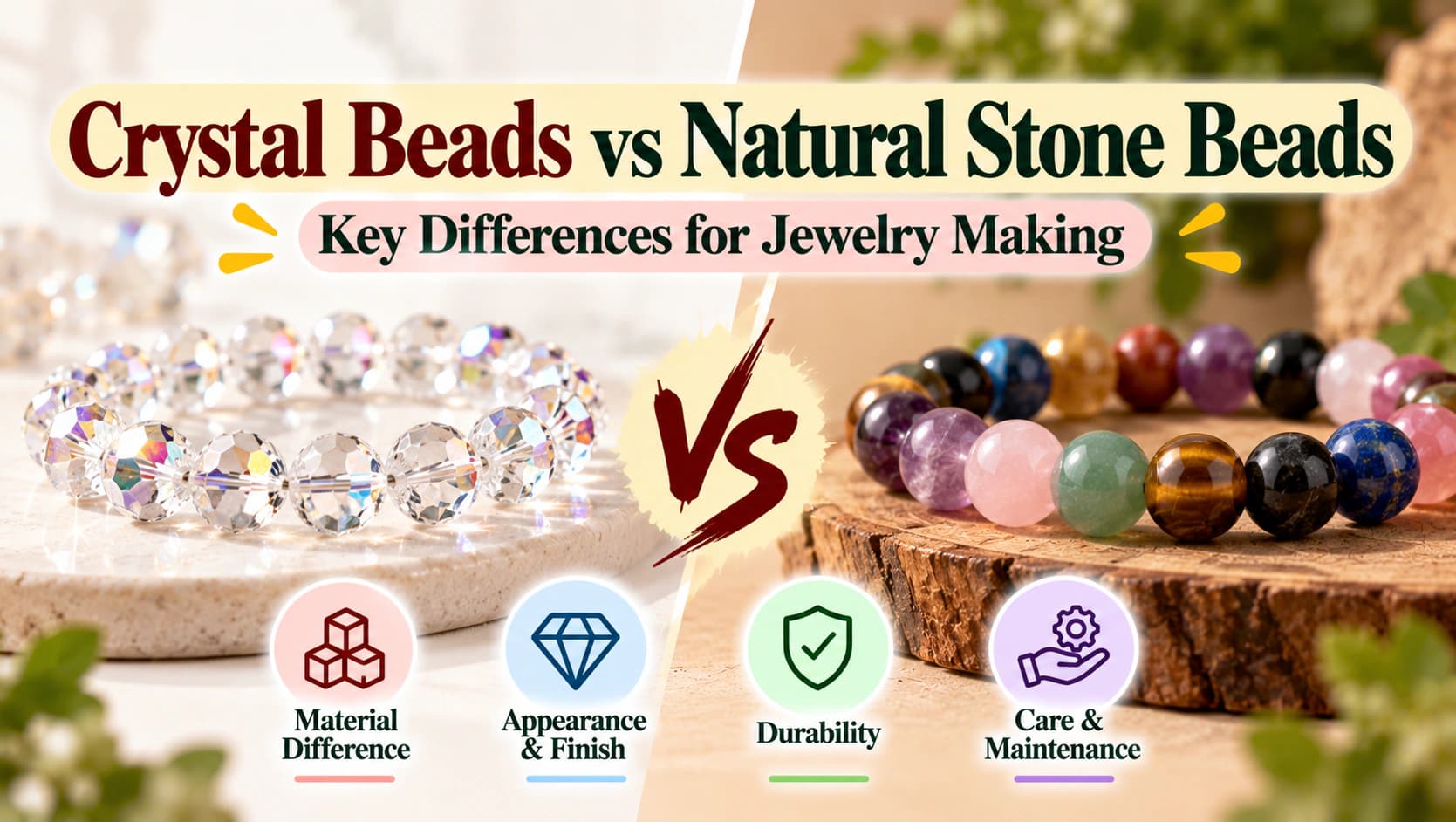
Explore the differences between crystal beads and natural stone beads, including materials, finishes, and care tips for your jewelry.
Read article
Discover how to choose crystal colours for home décor to enhance your space's energy and aesthetic. Explore styles, placements, and tips.
Read article