




Best Sellers4 min read
How to Clean Pyrite Décor: Tips for Dusting, Handling & Storage
Learn how to clean Pyrite décor effectively with our comprehensive guide. Discover dusting, handling, and storage tips for maintaining its beauty.
Read article🎉 100% CASHBACK ON EVERY ORDER — SHOP NOW!
Explore the Navagraha in Vedic Astrology, the nine planetary energies that influence our lives. Understand their meanings and significance.
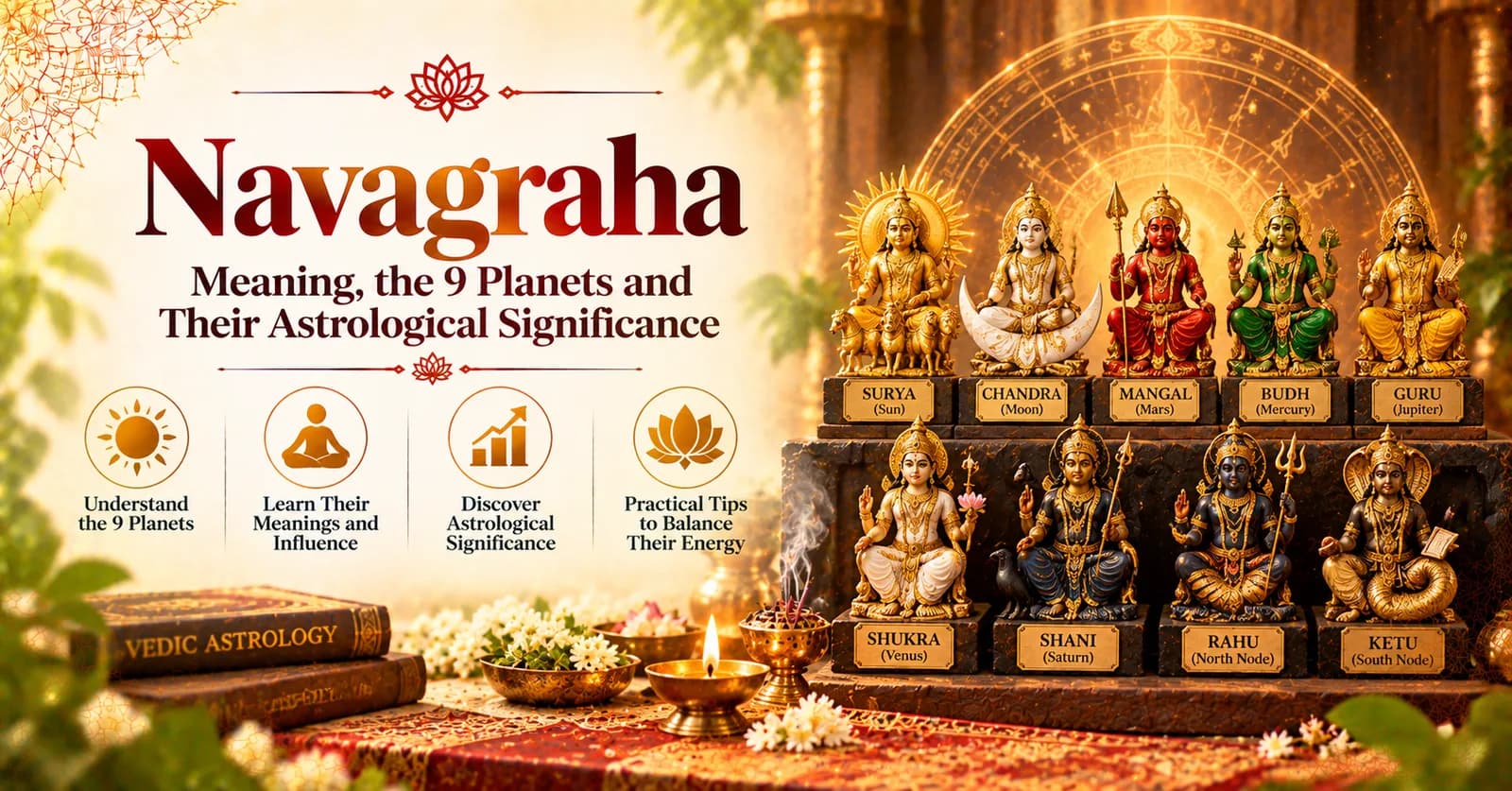
The Navagraha, or the nine celestial bodies in Vedic astrology, play a crucial role in shaping an individual’s life and destiny. Each planet has its unique energy and significance, influencing various aspects of life such as relationships, career, and health. This article delves into the meaning of Navagraha, exploring the nine planets and their astrological implications in detail.
Navagraha refers to the nine celestial bodies in Vedic astrology, which are traditionally believed to influence human affairs and natural phenomena. The nine planets are Surya (Sun), Chandra (Moon), Mangal (Mars), Budh (Mercury), Guru (Jupiter), Shukra (Venus), Shani (Saturn), Rahu (North Node), and Ketu (South Node). Each planet embodies specific energies and characteristics, shaping individuals' personalities and experiences.
Surya, or the Sun, is the first among the Navagraha and symbolizes vitality, power, and authority. It represents the self, ego, and one's core identity. Traditionally associated with leadership and success, the Sun's position in a birth chart can indicate a person's potential for achievement and recognition.
Individuals with a strong Surya in their charts are often seen as natural leaders, able to inspire and motivate others. They may excel in careers that require confidence and a strong sense of self, such as politics or entrepreneurship. Rituals such as Surya Namaskar (Sun Salutation) are often performed to honor the Sun and harness its energy.
Chandra, or the Moon, represents emotions, intuition, and the mind. It governs one's emotional responses and mental well-being. The Moon is often considered a nurturing force, reflecting how individuals deal with their feelings and relationships.
A strong Chandra can enhance one's emotional intelligence, making them empathetic and understanding towards others. People with a prominent Moon are often drawn to creative pursuits, such as art or music, where they can express their feelings. Meditative practices that focus on lunar energy, like moonlight meditation, can help individuals connect with their inner selves.
Mangal, or Mars, symbolizes energy, action, and assertiveness. It represents courage, determination, and the drive to achieve goals. Mars is linked to ambition and competitive spirit, often influencing how individuals tackle challenges in their lives.
Those with a strong Mangal are often seen as go-getters, unafraid to pursue their ambitions. They may thrive in careers that require bravery and decisiveness, such as the military or sports. However, Mangal can also lead to impulsiveness, so individuals are encouraged to balance this energy with patience and strategy.
Budh, or Mercury, represents intellect, communication, and analytical thinking. It governs how individuals express themselves and interact with others. Mercury's influence can enhance the ability to learn, adapt, and make decisions effectively.
A strong Budh can lead to success in fields that require communication, such as writing, teaching, or sales. Individuals are encouraged to engage in activities that stimulate their minds, such as reading, puzzles, or debates. Practicing mindfulness can also enhance the clarity of thought associated with Mercury.
Guru, or Jupiter, is known as the planet of wisdom, growth, and abundance. It represents spirituality, higher learning, and moral values. Jupiter's influence encourages individuals to seek knowledge and truth, often leading to personal growth and prosperity.
Individuals with a strong Jupiter are often seen as mentors or teachers, guiding others on their spiritual or educational paths. They may experience good fortune in their endeavors, especially those involving education or philanthropy. Engaging in charitable acts can further enhance Jupiter's positive influence in one's life.
Shukra, or Venus, symbolizes love, beauty, and harmony. It governs relationships, aesthetics, and pleasures. Venus's influence encourages individuals to seek joy and fulfillment in their personal and social lives.
A strong Shukra can enhance one's ability to form meaningful connections and appreciate beauty in all forms. Individuals may excel in creative fields such as art, music, or fashion. Engaging in activities that bring joy, like attending cultural events or decorating spaces, can help harness Venus's energy.
Shani, or Saturn, represents discipline, responsibility, and challenges. It governs time, structure, and the lessons learned through hardships. Saturn's influence encourages patience and perseverance, often leading to long-term success.
Individuals with a strong Saturn are often diligent workers, capable of overcoming obstacles in their paths. They may find success in careers that require careful planning and dedication, such as engineering or management. Reflecting on past challenges and learning from them can further strengthen Saturn's positive influence.
Rahu and Ketu are known as shadow planets in Vedic astrology. Rahu represents desires, materialism, and ambition, while Ketu symbolizes spirituality, detachment, and enlightenment. Together, they influence the karmic lessons individuals must learn in their lifetimes.
Rahu can lead to a strong desire for success and recognition, often pushing individuals to pursue their ambitions aggressively. However, it can also lead to confusion and distraction. Ketu, on the other hand, encourages spiritual growth and inner peace, often urging individuals to let go of material attachments. Balancing the energies of Rahu and Ketu can lead to a fulfilling life where ambitions are pursued without losing spiritual sight.
Understanding the Navagraha and their energies can provide valuable insights into one’s personality and life path. Some practitioners believe that harnessing the energies of these celestial bodies can aid in personal growth and spiritual development. Here are some ways to integrate Navagraha energy into your daily routine:
By consciously connecting with the Navagraha, individuals can enhance their personal growth, navigate challenges, and embrace opportunities more effectively.
For those looking to enhance their spiritual journey, consider exploring products like the Healing Harmony Rudraksha Karungali Bracelet, which is designed to promote tranquility and balance. Additionally, the Dhan Yog Energy Bracelet can aid in manifesting prosperity and balance in your life.
Navagraha refers to the nine celestial bodies in Vedic astrology, which are believed to influence various aspects of human life and natural phenomena.
Each of the nine planets in Navagraha embodies unique energies that can influence personality traits, relationships, and life experiences according to Vedic astrology.
Surya, or the Sun, symbolizes vitality, authority, and self-expression. It is associated with leadership and can indicate one's potential for success.
Mangal, or Mars, represents energy, action, and assertiveness. It influences ambition and competitive nature, impacting how individuals face challenges.
Rahu represents material desires and ambition, while Ketu symbolizes spirituality and detachment. Together, they influence karmic lessons in one's life.
Learn how to clean Pyrite décor effectively with our comprehensive guide. Discover dusting, handling, and storage tips for maintaining its beauty.
Read article
Explore the differences between crystal beads and natural stone beads, including materials, finishes, and care tips for your jewelry.
Read article
Discover how to choose crystal colours for home décor to enhance your space's energy and aesthetic. Explore styles, placements, and tips.
Read article