



Vedic Astrology5 min read
Neech Bhang Raj Yoga: Meaning, Formation & Traditional Interpretation
Discover the significance of Neech Bhang Raj Yoga in Vedic astrology, its formation, and traditional interpretations.
Read article🎉 100% CASHBACK ON EVERY ORDER — SHOP NOW!
Discover the significance of the Navamsa Chart D9 in Vedic astrology. This beginner's guide explains its purpose and interpretation.
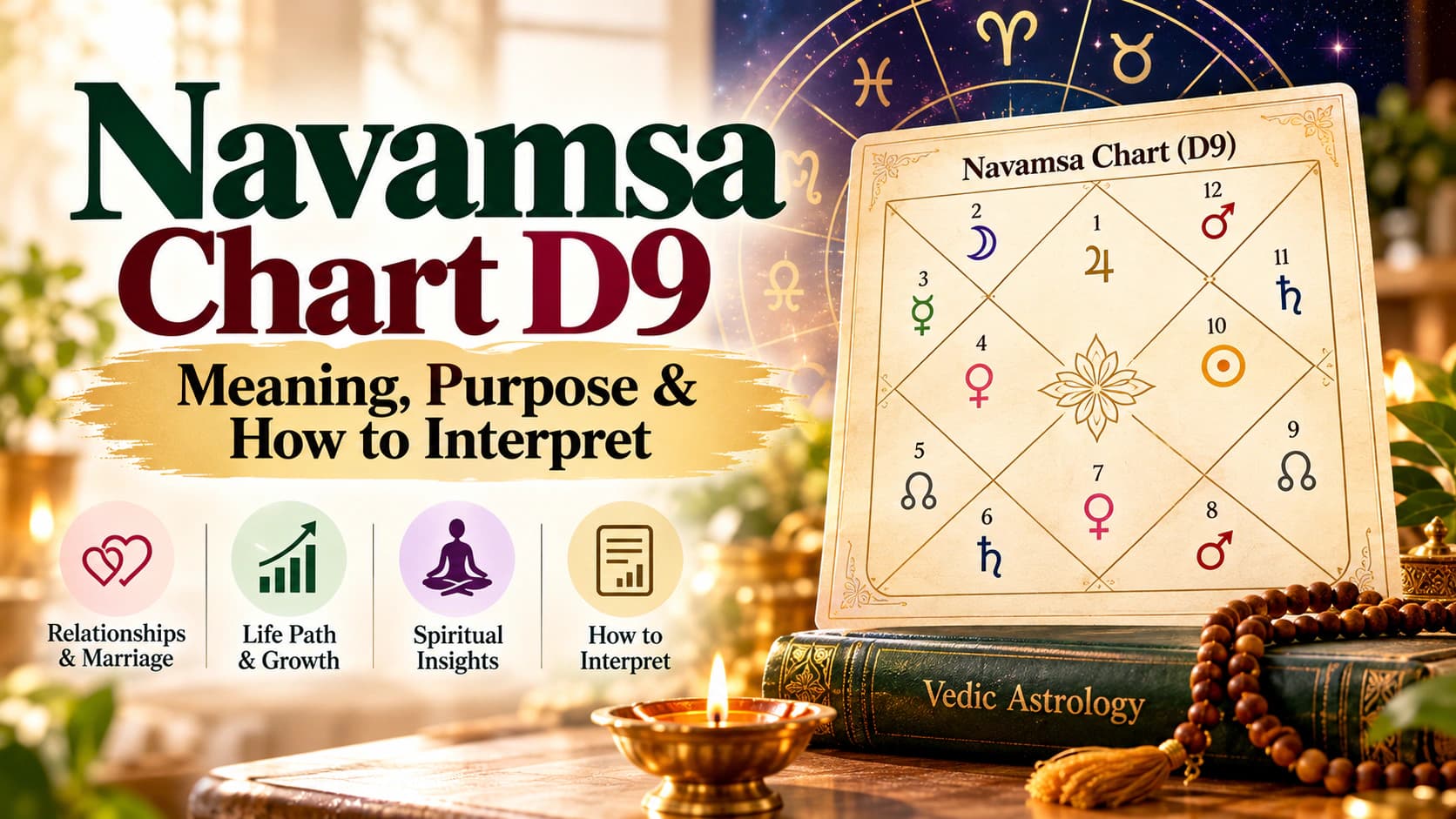
The Navamsa Chart D9 is an essential aspect of Vedic astrology, often considered as a deeper layer of understanding one's birth chart. It reveals insights into a person's life path, relationships, and spiritual growth. In this guide, we will explore the meaning, purpose, and interpretation of the Navamsa Chart, making it accessible for beginners.
The Navamsa Chart, also known as the D9 chart, is a divisional chart in Vedic astrology that provides additional insights beyond the main birth chart. It is traditionally associated with the ninth division of the zodiac and plays a crucial role in understanding various aspects of life, especially marriage and partnerships.
The term 'D9' refers to the ninth divisional chart in Vedic astrology. Each sign of the zodiac is divided into nine parts, which provides a more nuanced view of the planetary influences in a person's life. The D9 chart is especially important for analyzing the strength and position of planets related to relationships.
The Navamsa Chart has roots in ancient Vedic texts, where it was used to assess a person's destiny and life events. Traditionally, it is believed that the D9 chart reveals the true nature of a person's partnerships, making it a vital tool for astrologers.
The primary purpose of the Navamsa Chart is to provide deeper insights into one's relationships, especially marriage. It is believed that the D9 chart can reveal the true nature of a person's partnership potential, emotional compatibility, and even spiritual aspirations.
In Vedic astrology, the Navamsa Chart is often scrutinized to assess the compatibility between partners. Some practitioners believe that the positioning of planets in the D9 chart can indicate the strength of a marriage and the challenges that may arise. For example, if the 7th house lord (which represents partnerships) is well-placed in the Navamsa Chart, it may suggest a harmonious relationship.
Beyond relationships, the Navamsa Chart also offers insights into spiritual growth. The D9 chart can indicate the nature of one's spiritual journey and the lessons to be learned. For instance, certain planetary placements may suggest a need for personal transformation and growth.
The meaning of the Navamsa Chart lies in its ability to reveal the inner workings of a person's life. It showcases how the energies of the planets play out in various aspects, particularly in relationships and personal growth. The D9 chart serves as a guide to understanding one's emotional and spiritual journey.
D9 chart astrology delves into the interpretation of the Navamsa Chart, highlighting the significance of each planet's placement and its influence on different life areas. By analyzing the D9 chart, astrologers can provide personalized insights that resonate with an individual's unique experiences.
For example, if a person has Jupiter in the 5th house of their Navamsa Chart, it may indicate a strong inclination toward creativity and children. Jupiter is traditionally associated with growth and expansion, suggesting that partnerships may foster personal development and happiness.
Reading a Navamsa Chart requires a basic understanding of Vedic astrology principles. The D9 chart is derived from the main birth chart, and its interpretation involves analyzing the positions of planets in various houses. Beginners can start by identifying the key elements, such as the ascendant, planetary placements, and aspects between planets.
The Navamsa Kundli is another term for the Navamsa Chart. It plays a vital role in Vedic astrology, as it provides insights into the spiritual and emotional dimensions of a person's life. By studying the Navamsa Kundli, astrologers can offer guidance on personal growth, relationship dynamics, and overall life path.
Some practitioners believe that the Navamsa Chart can illuminate one's spiritual journey. The D9 chart may reveal karmic patterns, lessons to be learned, and the potential for personal transformation.
To create a Navamsa Kundli, you can follow these steps:
For those new to Vedic astrology, understanding the basics of the Navamsa Chart is essential. Familiarizing oneself with the chart's structure, including its twelve houses and planetary placements, is the first step toward deeper insights.
Many beginners may confuse the Navamsa Chart with the main birth chart. While the birth chart offers a broad overview of an individual's life, the D9 chart delves into specific aspects, particularly relationships and spiritual growth. It is crucial to understand that both charts serve distinct purposes and complement each other.
For those looking to dive deeper into Vedic astrology, consider reading articles like What Is a Janam Kundli? to understand your birth chart better. Additionally, exploring the 12 Houses in Vedic Astrology can provide valuable context for interpreting your Navamsa Chart.
Interpreting the Navamsa Chart involves analyzing the relationships between planets and their placements in various houses. Astrologers look for patterns and connections that can provide valuable insights into a person's life journey.
The D9 chart can reveal insights about emotional compatibility, personal challenges, and the potential for growth in relationships. By understanding these elements, individuals can navigate their life paths more effectively.
Consider a person with a strong Ketu placement in their Navamsa Chart. Ketu, known for its spiritual significance, may suggest a focus on spiritual growth and detachment from material aspects, indicating that relationships may also reflect this spiritual journey.
The birth chart and Navamsa Chart are interconnected, providing a comprehensive view of an individual's life. The D9 chart enhances the understanding gained from the birth chart, offering a more profound perspective on relationships and spiritual growth.
While the birth chart sets the foundation, the Navamsa Chart adds a layer of depth. Astrologers often use both charts to provide a holistic analysis, helping individuals understand their life experiences more clearly. For instance, if the main birth chart indicates challenges in relationships, the Navamsa Chart may provide insights into how to navigate these challenges.
In conclusion, the Navamsa Chart D9 is a powerful tool in Vedic astrology that provides valuable insights into relationships and spiritual growth. By understanding its purpose and interpretation, beginners can embark on a journey of self-discovery and personal development.
For those interested in enhancing their journey, consider exploring our Rose Quartz Love Manifestation Bracelet or the Yin Yang Hamsa Hand Crystal Bracelet, both of which are traditionally associated with emotional balance and harmony.
The Navamsa Chart D9 is a divisional chart in Vedic astrology that provides deeper insights into relationships and spiritual growth. It is derived from the main birth chart and focuses on the ninth division of the zodiac.
While the birth chart offers a broad overview of an individual's life, the Navamsa Chart D9 delves into specific aspects, particularly relationships and spiritual insights. It complements the birth chart for a more comprehensive understanding.
The Navamsa Chart is important because it reveals insights into marriage, partnerships, and spiritual growth. It helps astrologers assess compatibility and provides guidance on personal development.
To read a Navamsa Chart, start by identifying the ascendant, planetary positions, and houses. Analyze the relationships between planets to gain insights into various life aspects, especially relationships.
The Navamsa Chart does not predict the future but offers insights into potential challenges and opportunities in relationships and personal growth. It serves as a guide for self-discovery.
Discover the significance of Neech Bhang Raj Yoga in Vedic astrology, its formation, and traditional interpretations.
Read article
Learn the essential steps to read a Panchang effectively, understand its components, and use it for daily guidance.
Read article
Discover the significance and interpretation of Darakaraka in Vedic astrology, focusing on its role in understanding relationships and spouse significators.
Read article