


Vedic Astrology5 min read
Neech Bhang Raj Yoga: Meaning, Formation & Traditional Interpretation
Discover the significance of Neech Bhang Raj Yoga in Vedic astrology, its formation, and traditional interpretations.
Read article🎉 100% CASHBACK ON EVERY ORDER — SHOP NOW!
Learn the essential steps to read a Panchang effectively, understand its components, and use it for daily guidance.
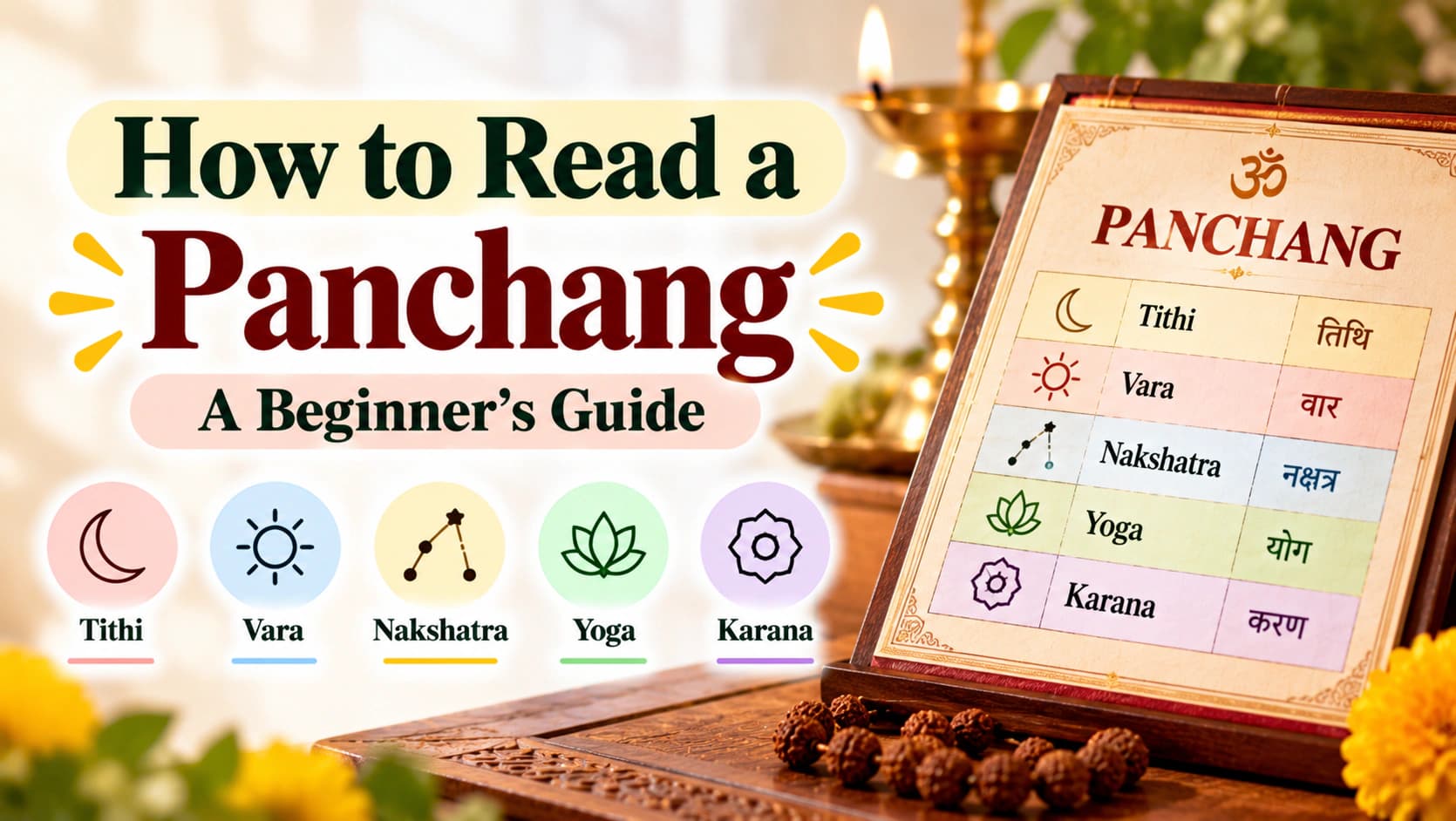
Learning how to read a Panchang can unlock a wealth of knowledge about time, auspicious moments, and spiritual practices in Hindu tradition. This guide will walk you through the essential elements of a Panchang, helping beginners navigate its complexities with ease.
The Panchang, also known as the Hindu calendar, is a crucial tool in Vedic astrology and is used to determine auspicious timings for various rituals and activities. It consists of five main elements: Tithi, Vara, Nakshatra, Yoga, and Karana. Each component offers valuable insights into daily life and spiritual practices.
Tithi refers to the lunar day in the Hindu calendar, representing the phase of the moon. There are 30 Tithis in a lunar month, each playing a significant role in determining auspicious times. Understanding Tithi meaning can help you plan rituals effectively. For instance, the 15th Tithi, known as Purnima, is considered highly auspicious for performing rituals and ceremonies.
Vara represents the day of the week in the Panchang. Each day is associated with a specific planet and has unique characteristics. Knowing the Vara meaning allows you to align your activities with the energies of the day. For example, Monday (associated with the Moon) is ideal for nurturing activities, while Saturday (associated with Saturn) is suited for introspection and discipline.
To effectively read a Panchang, it’s essential to understand its five main components:
To read the daily Panchang, start by locating the date you're interested in. The Panchang will list the Tithi, Vara, Nakshatra, Yoga, and Karana for that day. Here’s a simple way to interpret these elements:
When planning rituals or ceremonies, refer to the Panchang to choose the most auspicious timings. For instance, certain Tithis are considered more favorable for weddings or starting new ventures. Aligning your activities with the Panchang can enhance their effectiveness. For example, you might choose to wear a 5 Mukhi Rudraksha Bracelet during significant rituals as it is traditionally associated with spiritual growth and protection.
The Panchang is based on the lunar calendar, which differs from the solar calendar. This section will explain how the lunar calendar works and its significance in Hindu culture. The lunar months are divided into waxing (Shukla Paksha) and waning phases (Krishna Paksha), influencing various aspects of life. The waxing phase is ideal for new beginnings, while the waning phase is often reserved for introspection and closure.
In the lunar calendar, the waxing phase is considered auspicious for new beginnings, while the waning phase is often reserved for introspection and closure. For instance, starting a new project during Shukla Paksha can lead to more positive outcomes. Understanding these phases can guide your planning and help you make informed decisions.
As you start reading the Panchang, here are some practical tips:
Utilizing online resources can enhance your understanding. Websites offer detailed explanations and interpretations of various Panchang elements. Consider exploring articles like What Is a Panchang? for deeper insights into how each component functions.
Additionally, you might find it helpful to read about what Tithi means in more detail, as this will allow you to grasp how lunar days affect your daily life.
Incorporating the Panchang into your daily routine can enrich your spiritual journey. By aligning your activities according to its guidance, you may experience a greater sense of harmony and purpose. For practical applications, consider wearing a 5 Mukhi Rudraksha for spiritual support as you embark on this journey. This bead is often used in meditation to enhance focus and emotional balance.
Understanding how to read a Panchang opens up a world of spiritual insights and practical applications in daily life. Embrace its teachings and allow it to guide your interactions with time and the universe. As you become more familiar with its elements, you will find that the Panchang can serve not just as a calendar but as a spiritual tool that enhances your daily experiences.
A Panchang is a traditional Hindu calendar that includes five elements: Tithi, Vara, Nakshatra, Yoga, and Karana. It is used to determine auspicious timings for rituals and daily activities.
To find the Tithi for today, consult a Panchang or a reliable Hindu calendar website. It will display the current Tithi along with its significance and any associated rituals.
Vara represents the day of the week and is associated with different planetary energies. Understanding the Vara can help you align your activities with the day's auspiciousness.
Yes, a Panchang is highly beneficial for personal rituals. It provides guidance on which days and times are most auspicious for specific activities, enhancing their effectiveness.
No, the lunar calendar is based on the moon's phases, while the solar calendar is based on the sun's position. The lunar calendar has different months and is often used in Hindu traditions.
For more in-depth knowledge about Panchang elements, consider reading articles like <a href="/blogs/what-is-a-panchang-understanding-tithi-vara-yoga-karana-nakshatra">What Is a Panchang?</a> which explains each component in detail.
Discover the significance of Neech Bhang Raj Yoga in Vedic astrology, its formation, and traditional interpretations.
Read article
Discover the significance and interpretation of Darakaraka in Vedic astrology, focusing on its role in understanding relationships and spouse significators.
Read article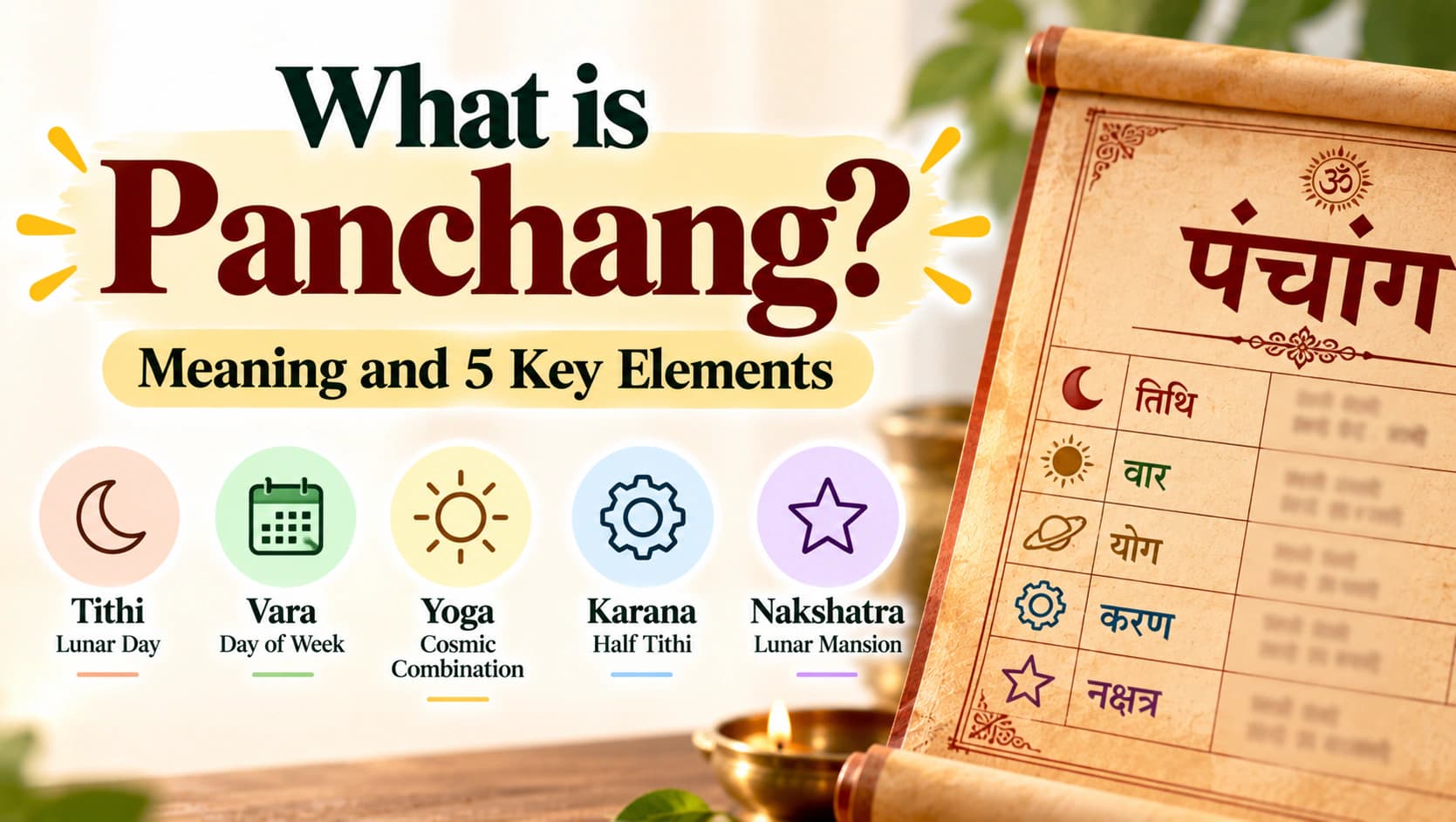
Discover the meaning of Panchang and its five elements: Tithi, Vara, Yoga, Karana, and Nakshatra in this beginner's guide to the Hindu calendar.
Read article