


Vedic Astrology5 min read
Neech Bhang Raj Yoga: Meaning, Formation & Traditional Interpretation
Discover the significance of Neech Bhang Raj Yoga in Vedic astrology, its formation, and traditional interpretations.
Read article🎉 100% CASHBACK ON EVERY ORDER — SHOP NOW!
Explore the concept of Tithi in the Hindu calendar, its significance, and the 30 lunar dates that shape traditional practices.
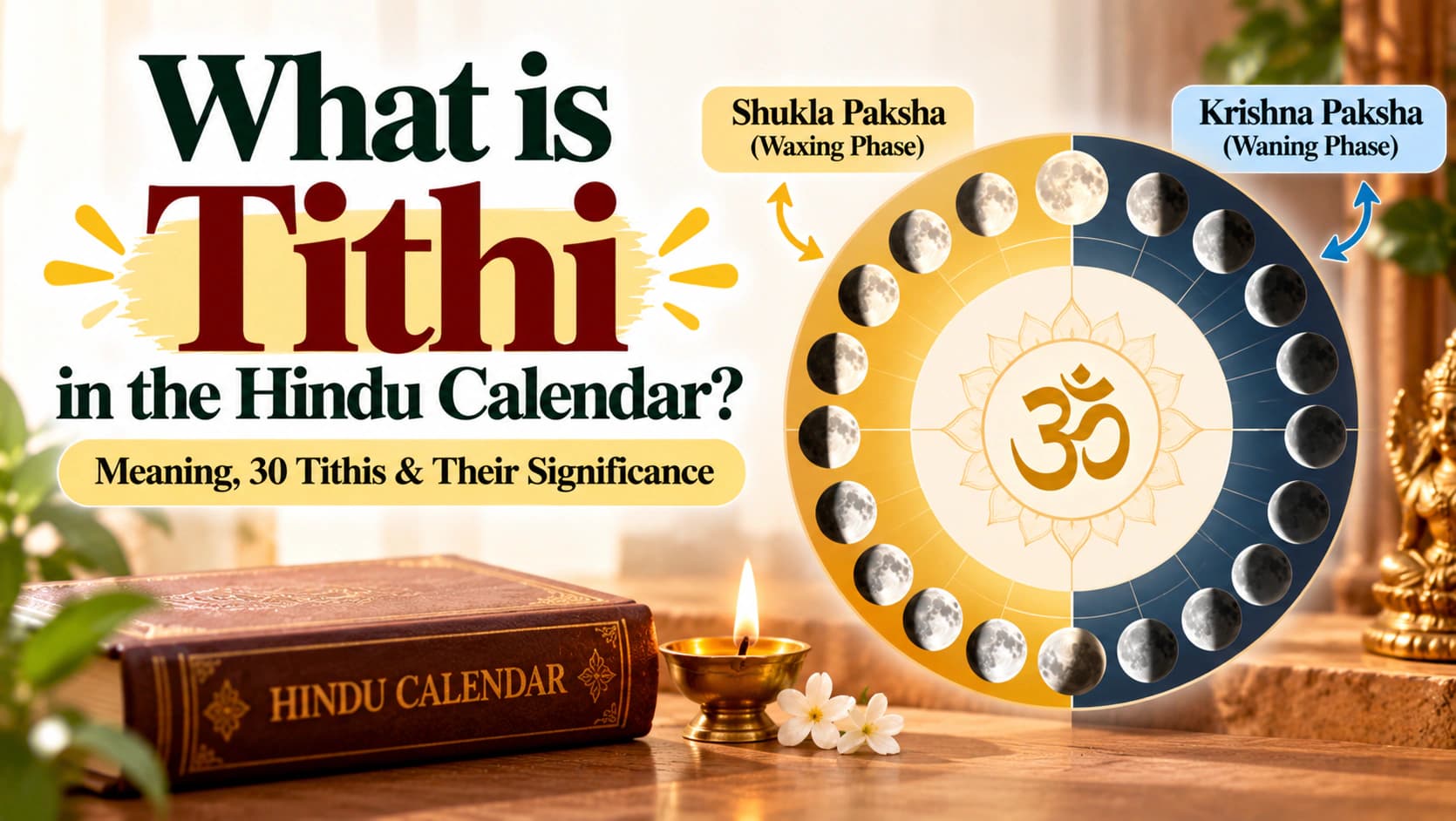
The Tithi in the Hindu calendar refers to a lunar day, which is a fundamental component of time-keeping in Hinduism. There are 30 Tithis in a lunar month, divided into two phases: Shukla Paksha (waxing phase) and Krishna Paksha (waning phase). Each Tithi is traditionally associated with various festivals and rituals, making it essential for spiritual practices.
The term 'Tithi' originates from the Sanskrit word meaning 'to shine' or 'to illuminate.' It represents a specific lunar day, calculated based on the position of the moon in relation to the sun. Each Tithi lasts until the moon moves 12 degrees ahead of its previous position. Understanding Tithi is essential for various Hindu rituals and auspicious timings.
The Hindu lunar calendar is a calendar based on the phases of the moon. It consists of 12 months, each containing 30 Tithis, making a total of about 354 days in a year. This calendar is vital for determining festival dates, auspicious timings for rituals, and personal events. While the solar calendar is used for civil purposes, the lunar calendar holds significant cultural and religious importance.
The lunar calendar is divided into two main cycles: Shukla Paksha, which is the waxing phase of the moon, and Krishna Paksha, the waning phase. Each of these cycles contains 15 Tithis, leading to a total of 30 Tithis in a month. This structure is significant for devotees as many rituals and festivals are celebrated based on these lunar phases.
Each lunar month features 30 Tithis, split into the two Pakshas. Understanding these Tithis helps in selecting the right time for ceremonies, festivals, and personal milestones.
Each Tithi has a unique name and significance. For instance, Ekadashi is considered highly auspicious for fasting and spiritual practices. Similarly, Poornima is associated with full moon celebrations, while Amavasya is often linked with rituals for ancestors. Understanding these names helps devotees align their practices with traditional beliefs.
The Panchang is a traditional Hindu calendar that provides detailed information about Tithis, Nakshatras (lunar mansions), weekdays, and other astrological aspects. It is essential for determining auspicious timings (muhurtas) for various activities, including weddings, housewarmings, and festivals. The Panchang also indicates Tithi, supporting practitioners in planning their rituals accordingly.
To effectively use the Panchang for planning rituals, one must first identify the specific Tithi and its significance. For instance, if planning for a wedding, it’s prudent to choose a Tithi falling under Shukla Paksha, especially on auspicious days like Ekadashi or Navami. Many online resources provide detailed Panchang information, making it easier for devotees to plan their activities.
Many Hindu festivals are celebrated based on specific Tithis. For example, Diwali is celebrated on Amavasya, while Holi falls on the full moon day (Poornima). Understanding the significance of Tithis helps individuals observe these festivals meaningfully and in accordance with tradition, enhancing their spiritual experience.
Calculating Tithi involves understanding the moon's position in relation to the sun. Tithis are calculated based on the lunar month, where each Tithi lasts until the moon moves 12 degrees ahead. Online Panchang tools can simplify this process, providing accurate Tithi details for any date. This knowledge is essential for aligning rituals with the lunar calendar.
Understanding Tithi in the Hindu calendar is crucial for aligning personal practices with traditional beliefs. By observing Tithis, individuals can celebrate festivals meaningfully, perform rituals at auspicious times, and deepen their spiritual connection. While the Tithi system can seem complex, embracing it can enrich one's life with cultural significance and spiritual awareness.
For those interested in enhancing their spiritual practices, consider exploring our Divine Krishna Maha Mantra on Premium Pyrite Frame, which promotes peace and prosperity, or our Prosperity OM Pyrite Bracelet, designed to attract abundance and inner peace. Additionally, you can learn more about traditional practices in our blog on Shri Yantra Meaning.
Tithi is a crucial concept in Hindu culture, representing lunar days that dictate the timing of festivals, rituals, and spiritual practices. Understanding Tithis helps devotees align their actions with traditional beliefs.
Tithis are calculated based on the moon's position in relation to the sun, with each Tithi lasting until the moon moves 12 degrees ahead. This calculation helps determine auspicious timings for rituals and festivals.
Shukla Paksha is the waxing phase of the moon, consisting of Tithis from Pratipada to Poornima. Krishna Paksha is the waning phase, covering Tithis from Pratipada to Amavasya. Both phases are essential for understanding the lunar calendar.
Tithis play a vital role in Hindu festivals, as many celebrations are based on specific Tithis. For example, Diwali is celebrated on Amavasya, while Holi is observed on Poornima, highlighting the importance of Tithis in cultural practices.
Yes, Tithi information can be easily found online through various Panchang tools and calendars. These resources provide accurate details about Tithis for any date, helping individuals plan their rituals and celebrations.
Discover the significance of Neech Bhang Raj Yoga in Vedic astrology, its formation, and traditional interpretations.
Read article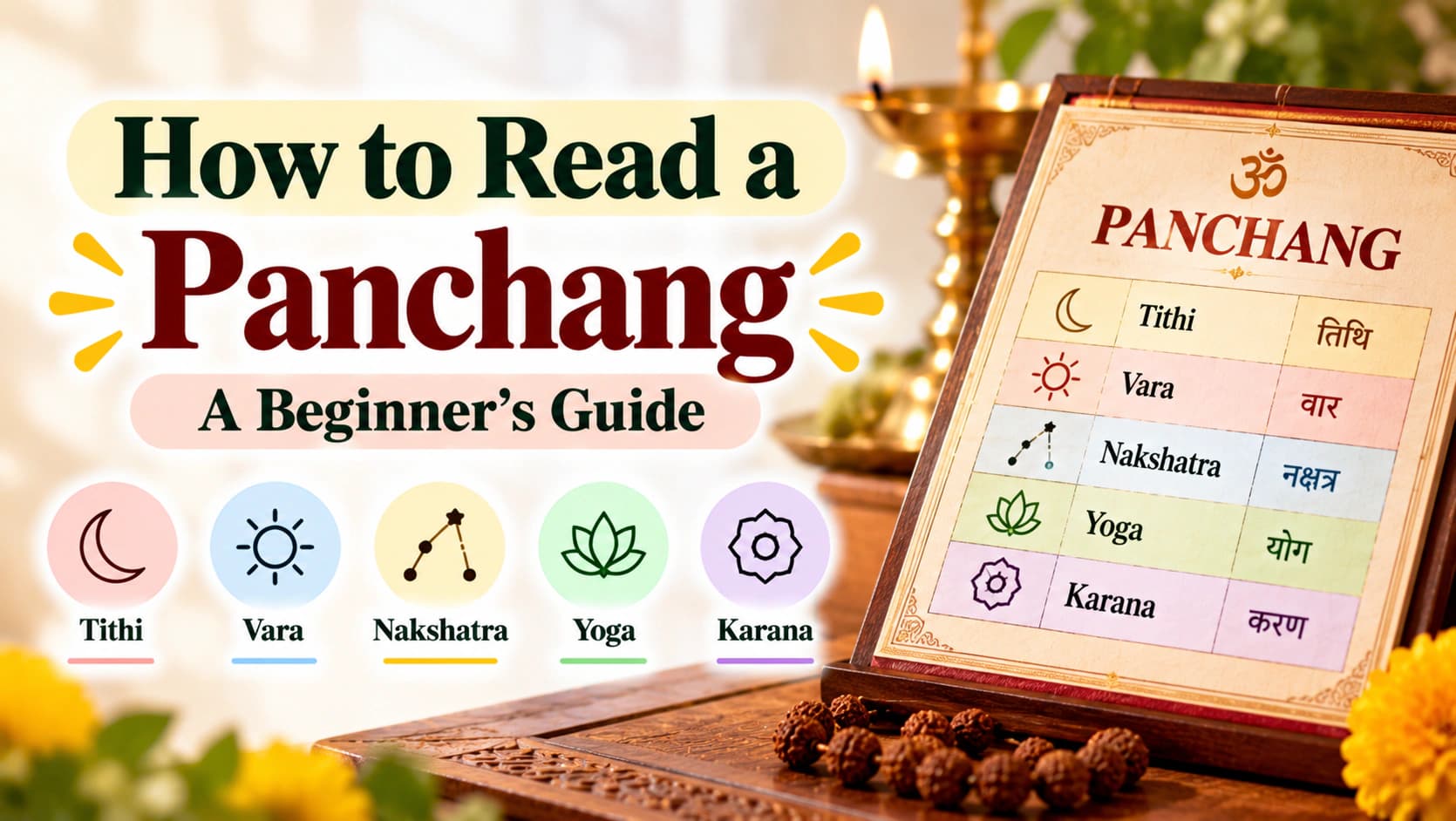
Learn the essential steps to read a Panchang effectively, understand its components, and use it for daily guidance.
Read article
Discover the significance and interpretation of Darakaraka in Vedic astrology, focusing on its role in understanding relationships and spouse significators.
Read article