


Vedic Astrology5 min read
Neech Bhang Raj Yoga: Meaning, Formation & Traditional Interpretation
Discover the significance of Neech Bhang Raj Yoga in Vedic astrology, its formation, and traditional interpretations.
Read article🎉 100% CASHBACK ON EVERY ORDER — SHOP NOW!
Discover the meaning of Panchang and its five elements: Tithi, Vara, Yoga, Karana, and Nakshatra in this beginner's guide to the Hindu calendar.
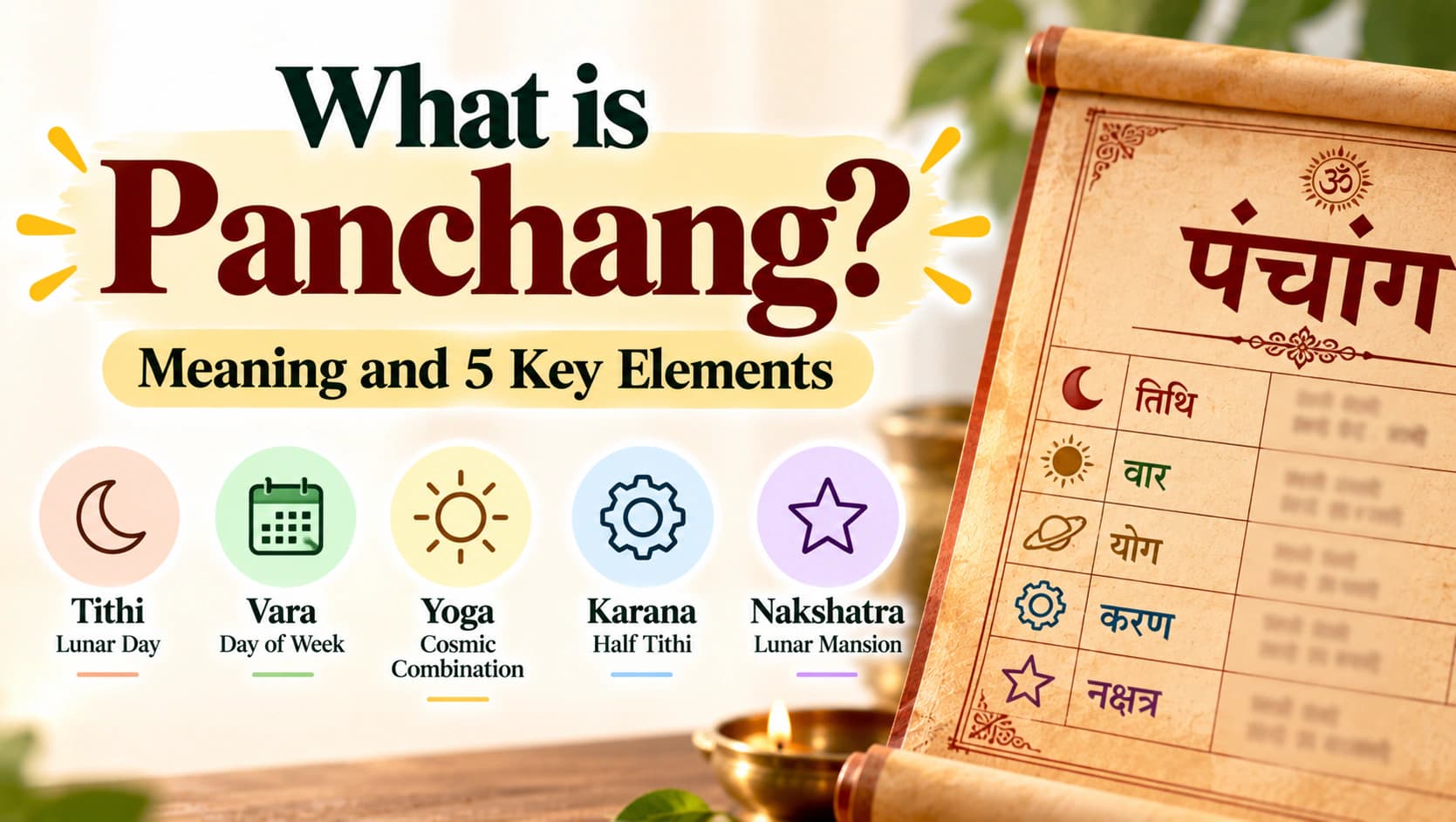
The Panchang, or Hindu calendar, serves as an essential tool for understanding time in the context of Vedic astrology and rituals. It encompasses five key elements: Tithi, Vara, Yoga, Karana, and Nakshatra, each contributing to the overall significance of the days and months. This guide will help you unravel the Panchang meaning and its components.
The term 'Panchang' derives from the Sanskrit words 'Pancha' meaning five, and 'Anga' meaning limbs or elements. Together, these signify the five elements of the Hindu calendar. Traditionally used for determining auspicious timings for rituals and ceremonies, the Panchang is a vital tool for practitioners of Vedic astrology. Understanding its elements can enhance your spiritual practices and guide your daily life.
The origins of the Panchang can be traced back to ancient Indian texts and scriptures. It has been used for centuries by astrologers and spiritual practitioners to align their activities with cosmic rhythms. The Panchang is not just a calendar; it encapsulates the philosophy of time, reflecting the cyclical nature of existence.
Tithi refers to the lunar day, which is the time taken for the moon to move 12 degrees in its orbit around the Earth. There are 30 Tithis in a lunar month, divided into Shukla Paksha (waxing phase) and Krishna Paksha (waning phase). Each Tithi has its significance, often determining the auspiciousness of events. For detailed insights into Tithi, you can read this article.
Vara represents the days of the week in the Panchang. There are seven Varas: Sunday (Ravivar), Monday (Somvar), Tuesday (Mangalvar), Wednesday (Budhvar), Thursday (Guruwar), Friday (Shukravar), and Saturday (Shanivar). Each Vara has unique qualities and influences, guiding practitioners in selecting the right days for specific activities.
Yoga in the Panchang denotes the combination of the positions of the sun and moon. There are 27 different Yogas, which are calculated based on the Tithi and the position of celestial bodies. Each Yoga has a specific impact on the day’s energy and is considered when planning important activities. For instance, some Yogas are conducive to starting new ventures, while others may suggest caution.
Karana refers to half a Tithi, making it an essential element in the Panchang. There are 11 Karanas, and each Tithi is divided into two Karanas. Some Karanas are considered auspicious, while others are not, influencing the timing of rituals and events. Understanding Karanas can help in selecting the best time for various activities.
Nakshatras are the 27 lunar mansions that play a crucial role in Vedic astrology. Each Nakshatra is associated with specific deities and has its characteristics. The Nakshatra in which the moon is positioned at the time of birth is significant for astrological readings. Understanding Nakshatras can help in personal and spiritual growth.
The Panchang calendar is a practical tool for daily life, helping individuals align their actions with cosmic rhythms. By consulting the Panchang, one can choose auspicious days for weddings, festivals, and other significant events. Understanding the Panchang can lead to better planning and harmony in life. Many people use it to guide their spiritual practices and rituals.
When planning rituals or ceremonies, consider the following:
Each day, the Panchang provides insights into the Tithi, Vara, Yoga, Karana, and Nakshatra, which can guide daily activities. Many people check the daily Panchang to determine the best time for spiritual practices, rituals, and even mundane tasks. It serves as a reminder of the cosmic connections influencing our lives. By integrating the Panchang into your routine, you can create a harmonious balance between your daily actions and spiritual goals.
The Vedic calendar, which includes the Panchang, is deeply rooted in Indian culture and spirituality. It reflects the cyclical nature of time and is instrumental in understanding the rhythm of life. Exploring the Vedic calendar can enhance one’s spiritual journey and connection to traditional practices. It is a holistic approach that encompasses not just timekeeping but also spiritual awareness.
For those new to the concept of Panchang, understanding its basics can be enlightening. Start by familiarizing yourself with the five elements and their significance. Regularly consulting the Panchang can help you develop a deeper connection with time and the universe, guiding your actions and decisions. As you grow in your understanding, you may find that your spiritual practices become more aligned with the natural rhythms of life.
By integrating the Panchang into your life, you can align your actions with the cosmic energies, enhancing your spiritual journey.
The Panchang serves as a traditional Hindu calendar that helps determine auspicious timings for rituals and events based on Tithi, Vara, Yoga, Karana, and Nakshatra.
Tithi is calculated based on the lunar cycle, representing the time taken for the moon to move 12 degrees in its orbit. There are 30 Tithis in a lunar month.
Nakshatras are the 27 lunar mansions in Vedic astrology, each associated with specific qualities and deities, influencing personal characteristics and events.
Consulting the daily Panchang can help you plan activities according to auspicious timings, enhancing your spiritual practices and daily decisions.
Shukla Paksha is the waxing phase of the moon, considered auspicious for new beginnings, while Krishna Paksha is the waning phase, often associated with closure and reflection.
Discover the significance of Neech Bhang Raj Yoga in Vedic astrology, its formation, and traditional interpretations.
Read article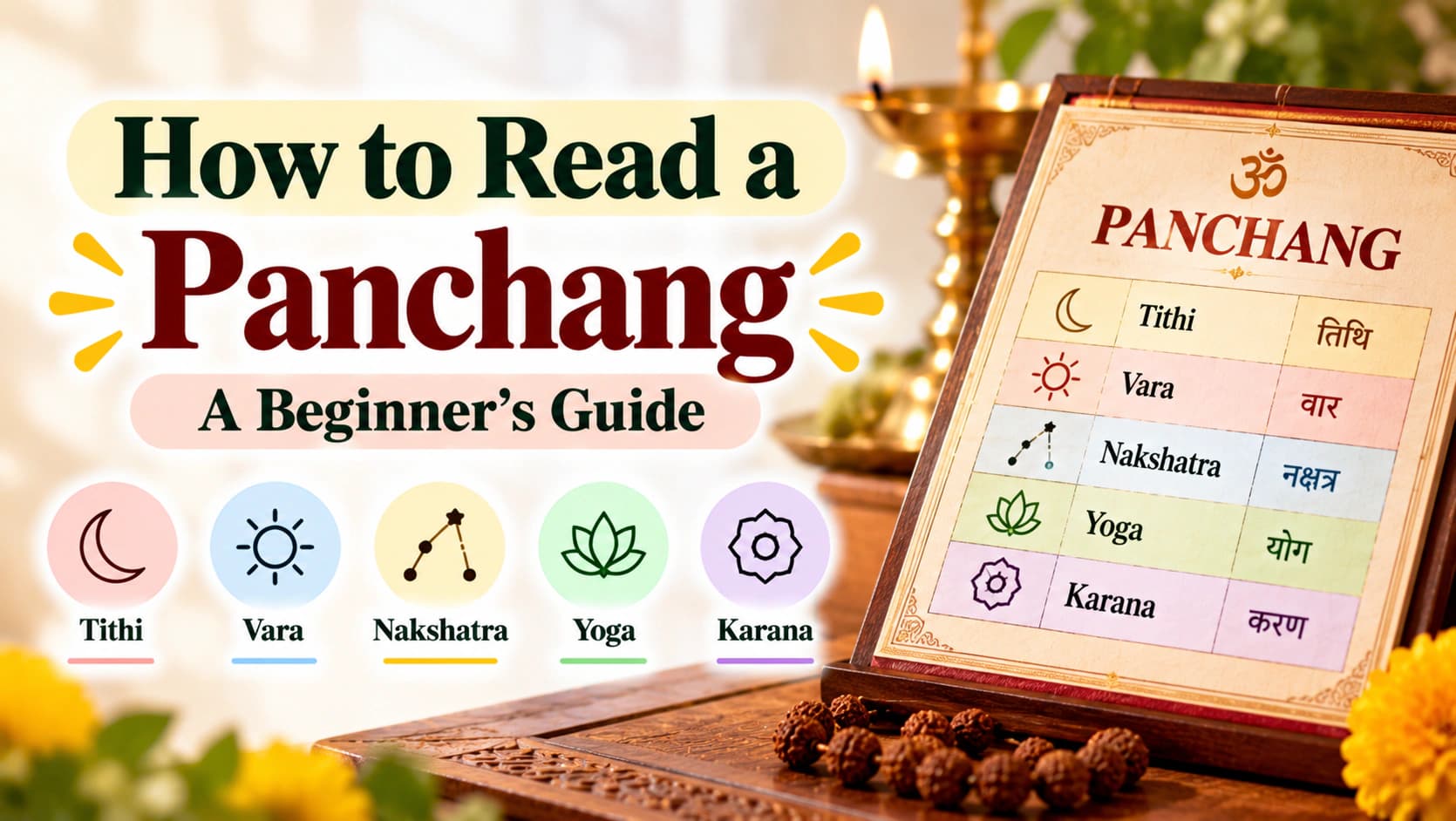
Learn the essential steps to read a Panchang effectively, understand its components, and use it for daily guidance.
Read article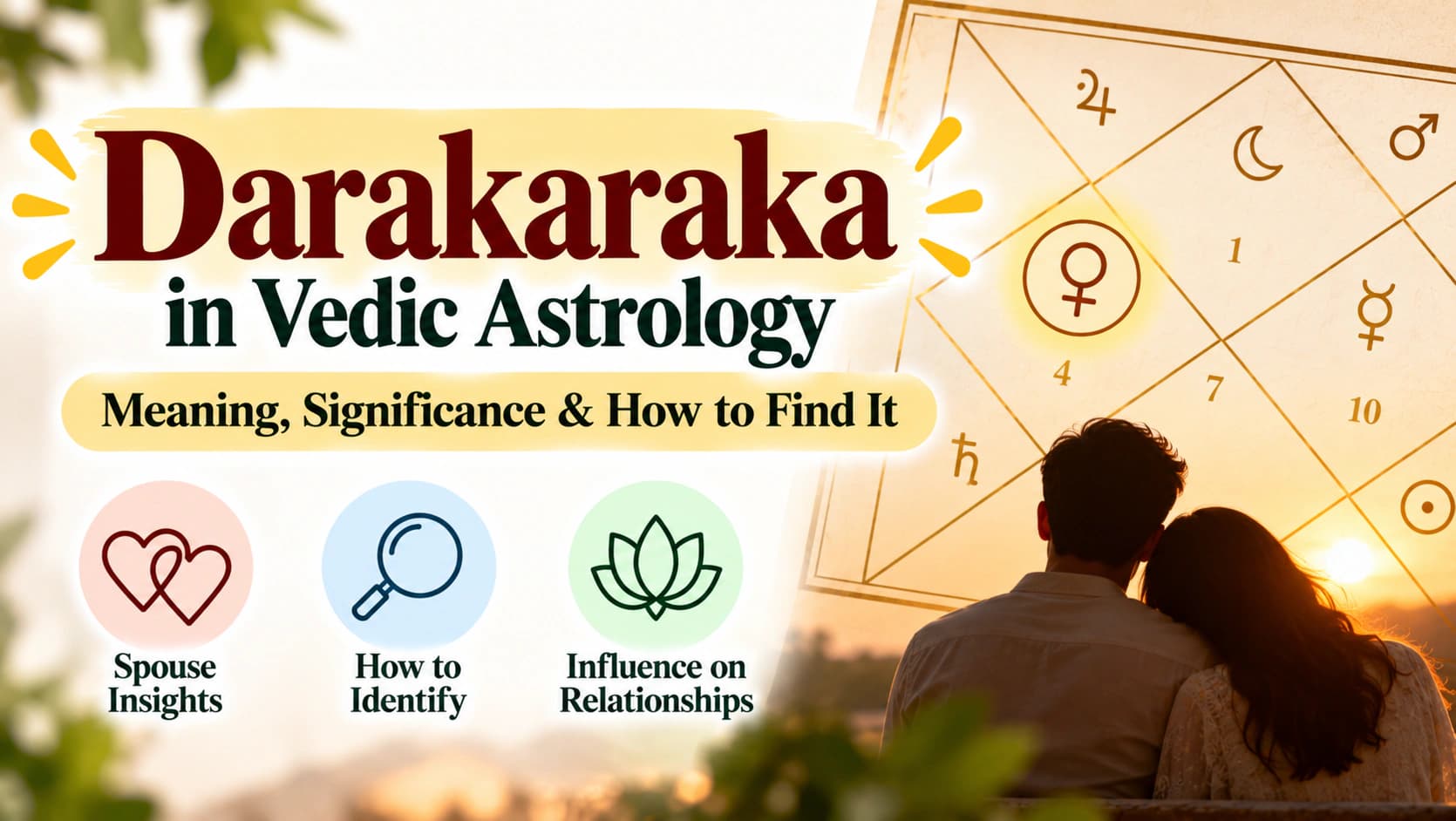
Discover the significance and interpretation of Darakaraka in Vedic astrology, focusing on its role in understanding relationships and spouse significators.
Read article