


Vedic Astrology5 min read
Neech Bhang Raj Yoga: Meaning, Formation & Traditional Interpretation
Discover the significance of Neech Bhang Raj Yoga in Vedic astrology, its formation, and traditional interpretations.
Read article🎉 100% CASHBACK ON EVERY ORDER — SHOP NOW!
Learn to interpret planetary aspects in Vedic astrology, including conjunctions, squares, and oppositions, to understand their influence in your birth chart.
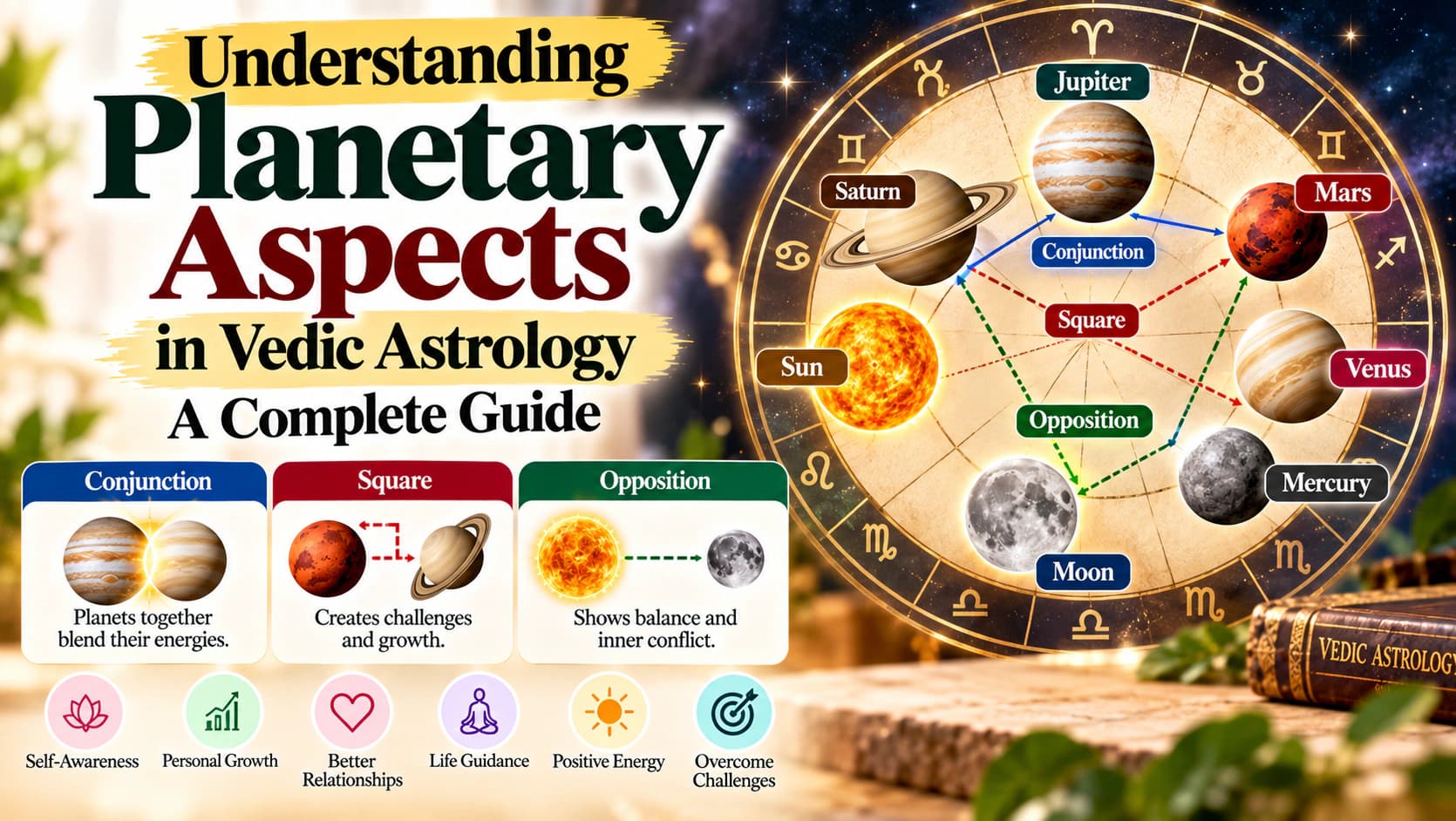
Understanding planetary aspects in Vedic astrology is crucial for interpreting how planets interact in a birth chart. These relationships, such as conjunctions, squares, and oppositions, offer insights into the dynamics of various energies at play in an individual’s life. This comprehensive guide will delve deep into the different types of aspects, their significance, and how to read them effectively.
Planetary aspects, also known as graha drishti, refer to the angles formed between planets in a Vedic astrology chart. These relationships can dramatically affect the energies each planet emits, influencing different areas of life. Understanding these aspects is essential for accurate horoscope readings, as they reveal how planets influence one another and how these influences manifest in an individual's experiences.
In Vedic astrology, aspects provide a deeper understanding of how planets influence each other. The nature of these angles can reveal strengths, challenges, and opportunities within a person's life, helping astrologers interpret the planetary influence in kundli. For instance, a harmonious aspect between beneficial planets can enhance positive traits, while challenging aspects may require individuals to confront their limitations.
There are several types of aspects, including:
Conjunctions occur when two planets align in the same sign. This aspect typically signifies a merging of energies, amplifying the characteristics of both planets. For instance, a conjunction between Jupiter and Venus might enhance creativity and abundance, as both planets are traditionally associated with positivity. Conversely, a conjunction between Mars and Saturn might lead to a struggle between action and restraint.
1. **Jupiter-Venus Conjunction:** This aspect often brings opportunities for growth in relationships and finances. Individuals may find themselves more charismatic and attractive to others, enhancing social interactions.
2. **Mars-Saturn Conjunction:** This combination can be challenging. It may indicate a person who is ambitious but faces obstacles due to self-doubt or external limitations, requiring them to work hard to achieve their goals.
Square aspects, formed by planets 90 degrees apart, often bring challenges and obstacles. These tensions can force individuals to confront conflicts or internal struggles. For example, a square between Mars and Saturn might indicate a battle between ambition and discipline, urging personal growth through overcoming difficulties.
1. **Moon-Saturn Square:** This aspect may manifest as emotional struggles, where individuals find it hard to express their feelings due to fear of rejection or criticism.
2. **Venus-Mars Square:** This combination can bring tension in relationships, leading to misunderstandings or passionate disputes. Individuals may need to work on communication and compromise.
Opposition aspects occur when planets are directly across from each other at 180 degrees. This alignment can create a push-pull dynamic, where the energies of the planets may conflict yet complement each other. For instance, an opposition between the Sun and Moon could signify internal conflicts between one's public persona and personal emotions.
1. **Sun-Moon Opposition:** This aspect may lead to a struggle between one’s desires and emotional needs, often resulting in a sense of internal conflict.
2. **Mercury-Jupiter Opposition:** Individuals may experience challenges in communication, where their ideas may be overly optimistic or unrealistic, necessitating a more grounded approach.
Each planetary aspect carries unique implications based on the planets involved. Understanding these influences can enhance personal development. For example, a strong Jupiter aspect could signify optimism and growth, while a challenging Saturn aspect may indicate lessons in responsibility.
To analyze your kundli, begin by identifying the positions of the planets in your chart. Look for conjunctions, squares, and oppositions, and assess how these aspects interact with each other. This analysis can reveal patterns in your life experiences and personal challenges.
Jupiter, the planet of expansion and wisdom, typically has a positive influence. Its aspects can enhance opportunities for learning and growth. For example, when Jupiter aspects the Moon, it may foster emotional well-being and optimism. This can be especially beneficial during challenging times, as Jupiter's energy encourages resilience.
1. **Jupiter-Moon Aspect:** This combination can enhance creativity and emotional intelligence, making individuals more empathetic and understanding.
2. **Jupiter-Venus Aspect:** This aspect often brings luck in financial matters and relationships, allowing individuals to attract abundance and harmony.
Saturn represents discipline and structure. Its aspects can bring lessons related to responsibility and hard work. A Saturn aspect to the Sun might indicate challenges in self-expression, urging the person to develop resilience and patience. While Saturn's influence can be tough, it often leads to significant personal growth.
1. **Saturn-Moon Aspect:** This aspect may lead to emotional restrictions, where individuals might struggle to express their feelings.
2. **Saturn-Mercury Aspect:** This combination can create challenges in communication, often causing individuals to overthink before speaking.
Mars symbolizes action and energy. Its aspects can influence motivation and assertiveness. For instance, a Mars aspect to Venus may enhance passion in relationships but can also lead to conflicts if not managed constructively. Understanding these dynamics can help individuals navigate their emotional landscape.
1. **Mars-Venus Aspect:** This combination can lead to intense romantic relationships, characterized by passion and drive.
2. **Mars-Saturn Aspect:** This aspect may indicate a struggle between ambition and self-discipline, where individuals might feel torn between pursuing their desires and adhering to responsibilities.
To read planetary aspects effectively, start by identifying the positions of the planets in your Vedic astrology chart. Then, analyze their relationships based on angles formed. This process can reveal the underlying themes and dynamics in your life.
By understanding planetary aspects in Vedic astrology, you can gain insights into your personal challenges and strengths, allowing for greater self-awareness and growth. For more information on reading your chart, explore our guide on Janam Kundli. Additionally, consider enhancing your spiritual practice with our Seven Chakra Energy Alignment Bracelet, designed to harmonize your chakras and invite emotional balance.
Understanding these aspects can be a powerful tool for personal development. To further explore the power of Vedic astrology, check out our blog on Navagraha in Vedic Astrology, where we discuss the nine planetary energies and their influences.
Planetary aspects refer to the angles formed between planets in a Vedic astrology chart. These relationships influence how the energies of the planets interact and affect various aspects of an individual's life.
Conjunctions occur when two planets are in the same sign, merging their energies. This aspect can amplify the traits of both planets, leading to significant influences in the areas represented by those planets.
Square aspects, formed by a 90-degree angle, often indicate tension and challenges. They can highlight areas of conflict that may require personal growth and resolution.
Oppositions, occurring at a 180-degree angle, create a push-pull dynamic between planets. This can lead to conflicts or complementary interactions, often revealing challenges and growth opportunities within personal relationships.
Jupiter is considered the planet of expansion and wisdom. Its aspects in a chart are often associated with optimism, growth opportunities, and learning experiences.
To read your Vedic astrology chart, start by identifying the positions of planets and their aspects. Analyze the angles formed between them to uncover underlying themes and dynamics in your life.
Discover the significance of Neech Bhang Raj Yoga in Vedic astrology, its formation, and traditional interpretations.
Read article
Learn the essential steps to read a Panchang effectively, understand its components, and use it for daily guidance.
Read article
Discover the significance and interpretation of Darakaraka in Vedic astrology, focusing on its role in understanding relationships and spouse significators.
Read article